- Home Care vs Hospital Care in Nepal: Which Is Better for Your Loved Ones?
- 1. Comfort and Familiar Environment
- 2. Personalized One-to-One Attention
- 3. Lower Risk of Infections
- 4. Cost Comparison
- 5. Emotional Support from Family
- When Is Hospital Care Still Necessary?
- When Should You Choose Home Care?
- How Care Nest Nepal Helps
- Final Thoughts
Home Care vs Hospital Care in Nepal: Which Is Better for Your Loved Ones?
When a family member needs medical or personal support, one of the biggest decisions is whether they should stay in a hospital or receive care at home. In Nepal, more families are now choosing professional home care services — and for good reason.
At Care Nest Nepal, we help families every day make this important choice. Here’s a clear comparison to help you decide.
1. Comfort and Familiar Environment
Hospitals can feel cold, noisy, and stressful. Patients often recover slower because they are away from their own bed, family, and daily routine.
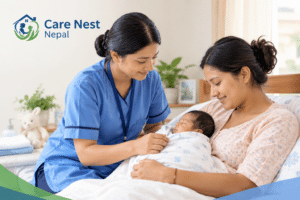
Home care allows your loved one to recover in a familiar and comfortable environment. This reduces stress and often leads to faster emotional and physical recovery — especially for elderly parents and post-surgery patients.
2. Personalized One-to-One Attention
In hospitals, nurses usually care for several patients at the same time. Attention is limited.
With professional home care, a trained caregiver focuses only on your family member. This means better monitoring of medication, meals, hygiene, mobility, and emotional support throughout the day.
3. Lower Risk of Infections
Hospitals carry a higher risk of hospital-acquired infections. For elderly people or those with weak immunity, this can be dangerous.
Home care significantly reduces this risk because the patient stays in a controlled and clean home environment.
4. Cost Comparison
Hospital stays in Nepal can become very expensive, especially for long-term care. Room charges, nursing fees, and other costs add up quickly.
Professional home care is usually more affordable for long-term needs while still providing quality medical and personal support.
5. Emotional Support from Family
When care happens at home, family members can stay close and involved. This emotional support is extremely valuable for recovery and mental well-being — something hospitals cannot fully provide.
When Is Hospital Care Still Necessary?
Hospital care is the right choice when:
- The patient needs emergency treatment or surgery
- Intensive monitoring or specialized equipment is required
- The condition is unstable or life-threatening
Once the patient is stable, many doctors recommend shifting to home care for continued recovery.
When Should You Choose Home Care?
Home care is ideal for:
- Elderly parents who need daily assistance
- Post-surgery recovery
- Patients with chronic illnesses
- Those who need medication management
- Families looking for comfortable long-term care
How Care Nest Nepal Helps
At Care Nest Nepal, we provide trained and verified caregivers for home nursing, elderly care, post-surgery support, and medication management across Kathmandu and other parts of Nepal.
Our caregivers work under professional guidance so your loved ones receive safe, reliable, and compassionate care at home.
Final Thoughts
Hospital care is essential in critical situations. But for recovery, long-term support, and daily living assistance, professional home care is often the better, safer, and more comfortable choice.
If you are considering home care for a family member, feel free to contact Care Nest Nepal. We are here to guide you and provide the right support.