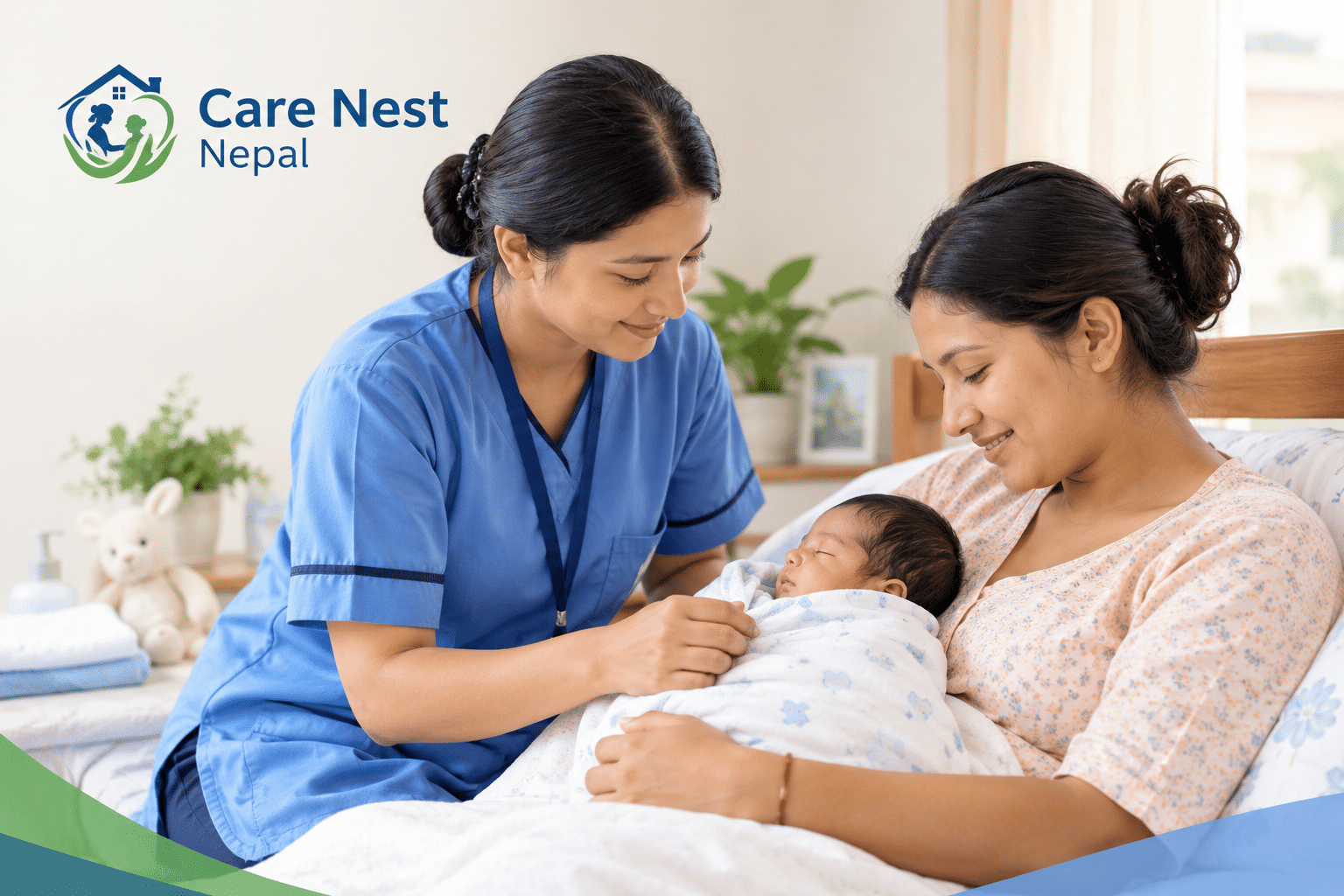
Bringing your baby home is exciting, and slightly terrifying. A trusted home care service takes some of that pressure off by sending trained nurses to your home for feeding, bathing, sleep routines, and health checks. Newborn care at home is a growing choice for Kathmandu families because mom can rest while someone experienced cares for the baby. This guide covers what that support includes, what to expect for the first week, and how to book it.
- Why Home Support Makes Sense in Nepal
- What Good Support Includes
- Feeding and Sleep
- Bathing and Hygiene
- Safe Sleep Basics
- Daily Health Checks
- Postnatal Care: Mom’s Recovery Matters Too
- Home Births and Hospital Stays
- Infant Care in Kathmandu: Why Families Choose Home Support
- Newborn Care Services at Home: Who Benefits Most
- Trained Nurse vs Babysitter: What’s the Difference?
- What to Expect in the First Week and First Month
- The First Week
- The First Month
- How to Book Baby Care Services in Nepal
- FAQ
- How soon after birth can home support start?
- What’s the difference between newborn help and babysitting?
- Can one nurse look after both mom and baby?
- Is support available after a C-section?
- How much does home support cost in Kathmandu?
- Ready to Get Support at Home?
Why Home Support Makes Sense in Nepal
Nine months of preparing for the birth. Zero months of preparing for what comes after.
That’s no exaggeration. Between broken sleep, healing bodies, and babies who can’t tell you what’s wrong, the first weeks blur together. Relatives mean well, but half their advice contradicts your doctor. If it’s your first baby, you’re learning everything at once, like how to hold her without panicking or whether crying means hungry or tired.
Having help fixes much of that. Instead of guessing at 3 a.m., you have a trained nurse who knows what normal looks like, and what doesn’t. Good infant care in Nepal isn’t about replacing you. It’s about giving you two more experienced hands.
What Good Support Includes
People assume it’s babysitting with extra steps. It isn’t. Proper infant care is built around newborn needs, and those needs change almost weekly.
Feeding and Sleep
Newborns feed every two to three hours, day and night. Your caregiver helps you build a routine, supports breastfeeding or bottle-feeding, and takes night feeds now and then so you can actually sleep.
Bathing and Hygiene
Newborn skin is thin, and the cord stump needs careful cleaning. With hygiene support from someone experienced, bathing the newborn stops being scary. They’ll also help you keep the room at a steady, comfortable temperature, because small babies lose heat fast.
Safe Sleep Basics
Lay babies on their backs on a firm, flat surface with nothing loose inside the cot. Your nurse will show you the setup on day one, so you’re not second-guessing it after midnight.
Daily Health Checks
Temperature, weight gain, feeding patterns, wet diapers: small details that say plenty about infant health. Your nurse tracks them daily and tells you, or your pediatrician, when something looks off. Know the warning signs too. Fever, poor feeding, unusual sleepiness, or trouble breathing means calling your doctor or heading to a hospital straight away. Spotting these early is part of the care for your little one, and it’s hard to do alone.
Postnatal Care: Mom’s Recovery Matters Too
This part gets overlooked. Recovery after birth is physically hard, and a mother who isn’t looked after will struggle to look after their newborn. Good maternal and newborn care covers both of you. That means home nursing help with hygiene, meals, medicines, vital signs, and wound care after a C-section.
Home Births and Hospital Stays
The plan depends on the type of delivery and the baby’s needs. Some families plan home births with midwives, while others leave a hospital in Kathmandu within one or two days. Either way, the days in the hospital are short and recovery isn’t. Rested mothers heal faster, and calmer mothers often have calmer babies. Many families combine baby and postnatal care into one plan for exactly that reason. Think of it as the care of the whole family, not just the newborn.
Infant Care in Kathmandu: Why Families Choose Home Support
Kathmandu families used to count on an aunt or grandmother turning up when babies arrived. That’s changing. More couples live in nuclear homes, away from relatives, and both parents work. Bringing a newborn home to a small flat with no relatives nearby is very different from how your parents did it.
That gap explains the rise of home caregivers who come to you. It also keeps a fragile newborn away from crowded clinic waiting rooms. Care at home in Kathmandu saves you repeated trips through traffic for routine checkups too.
Newborn Care Services at Home: Who Benefits Most
Anyone can use it, but a few situations make it especially useful:
- First-time parents who’ve never looked after an infant before
- Mothers recovering from a C-section
- Couples who both work and live far from relatives
- Families expecting twins, where two feeding schedules collide
- Parents whose doctor wants closer watching of a small or early baby
None of these means you’re doing it wrong. It just means the job is bigger than one tired person.
Trained Nurse vs Babysitter: What’s the Difference?
Some parents try the first few weeks alone, and some do fine. But babysitters and trained nurses are not the same thing. A babysitter watches a child, which is plenty once a kid is older. Nurses trained for newborns know cord care, safe bathing, feeding support, and the warning signs in a baby only days old.
So if you need help for babies under six weeks, look for trained newborn support, not general childcare. They’re different, even when advertised the same way. Ask yourself a simple question. If the cord looks red or feeding drops suddenly, does this person know what to do? A babysitter usually doesn’t have to. A nurse trained for newborns does.
What to Expect in the First Week and First Month
The First Week
In the first week, the focus is feeding, sleep, and cord care, plus rest for mom. Expect lots of questions. That’s normal.
The First Month
In the first month, routines settle, weight gain becomes steady, and you start reading their cues. Your nurse can adjust the plan as you go, with fewer visits once you feel confident, or more if you’d rather keep the support.
The World Health Organization notes that newborn mortality in the first weeks of life is higher than at any other stage of childhood. That’s why steady support early on matters so much.
How to Book Baby Care Services in Nepal
Not every provider trains staff the same way. Before you book, check for:
- Verified background checks for anyone entering your home
- Training for newborn and postpartum support, not general household help
- Flexible schedules, since babies ignore office hours
- A plan built around your delivery and what the little one needs
- Same-day or 24/7 availability for the first week
- Clear pricing upfront
Booking itself is simple. Contact the provider, share your due date and needs, agree on a plan, and meet your nurse before the first visit. Ask at the first call how caregivers are trained and what happens if you need to change the plan mid-week. Take your time with this choice, because you’re trusting someone with your newborn’s first weeks.
Cost usually depends on three things: how many hours you need each day, whether you want daytime or overnight cover, and how long you’ll need support. Some hours of bathing and feeding help cost far less than round-the-clock cover, so decide what actually keeps you going first. Then ask for the price in writing.
CareNest Nepal’s mother and baby support covers both of you together, delivered at home by trained nurses across Kathmandu Valley. It’s daily care support built for Nepal’s families, not fixed packages.
FAQ
How soon after birth can home support start?
Most families start within a few days of coming home, though some book a nurse before delivery so support is ready from day one.
What’s the difference between newborn help and babysitting?
Newborn help covers feeding support, cord and skin care, hygiene, and health checks for babies under two months. Babysitting is general supervision, usually for older kids.
Can one nurse look after both mom and baby?
Yes, and it’s the usual setup. Most plans combine postnatal care with feeding, bathing, and health checks for the baby and mom.
Is support available after a C-section?
Yes. Mothers often need extra help with movement, wound care, and daily tasks while healing.
How much does home support cost in Kathmandu?
It depends on the hours and whether cover is daily or round the clock. Many providers offer hourly, daily, and monthly plans, so ask for a clear quote first.
Ready to Get Support at Home?
The first weeks go fast, but they shape how confident you feel as a parent. Book a consultation to build a plan around your family, whether that’s some hours daily or round-the-clock support.