- IV & Injection Services at Home in Kathmandu: Is It Safe?
- What does IV service at home in Kathmandu actually include?
- Is home IV safe? The honest answer
- What can go wrong with injections and IV drips at home?
- Infection
- Vein irritation and leakage
- Allergic reactions
- Wrong medicine or wrong dose
- Who is a good fit for injection service at home in Nepal?
- Who should go to a hospital instead?
- What does a safe home IV visit look like?
- How do you choose a safe home nursing provider in Kathmandu?
- What should you watch for after an injection or IV?
- FAQ
- So, is it safe?
IV & Injection Services at Home in Kathmandu: Is It Safe?
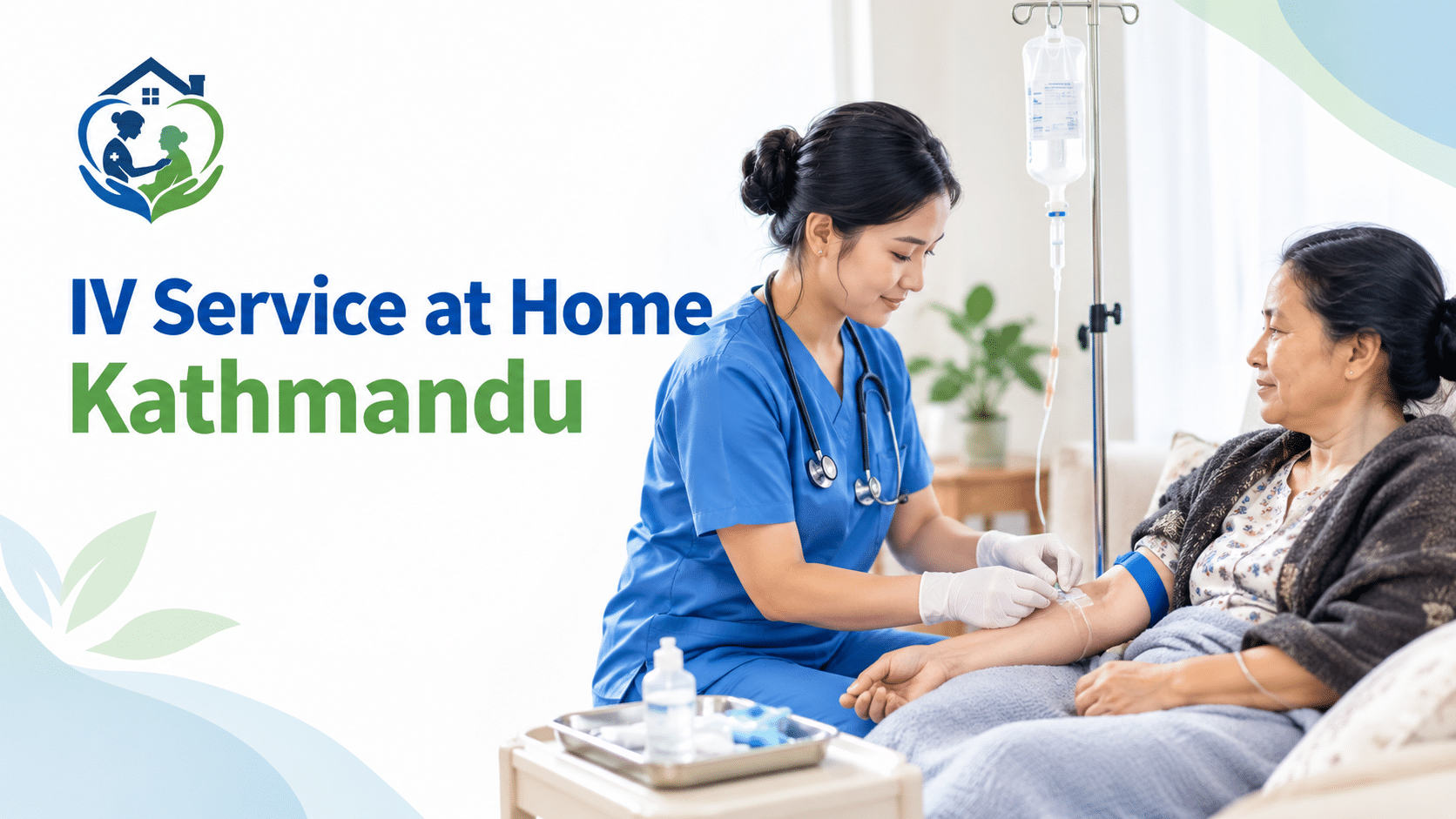
IV service at home in Kathmandu is generally safe when a licensed nurse administers it, a doctor prescribes the medication, and every needle and cannula is sterile and single-use. It suits stable patients who need fluids, antibiotics, or regular injections. It isn’t the right choice for emergencies or high-risk first doses. The safety comes from the setup, not from the location.
Picture this. Your mother’s doctor says she needs five days of IV antibiotics. The hospital is across the city, the ring road is jammed, and she can barely sit in a car without getting dizzy.
So you ask the question every family asks sooner or later: can this be done at home, and will she actually be safe? Let’s go through it honestly, including the parts that don’t make home care look perfect.
What does IV service at home in Kathmandu actually include?
A home IV and injection service means a trained nurse comes to your house and gives treatment that a doctor has already prescribed. That can be IV fluids, IV antibiotics, intramuscular injections, subcutaneous injections like insulin, and vitamin injections when a doctor has advised them.
The nurse also does the small things that matter. They check the patient’s condition, place and look after the cannula (the thin tube in the vein), and watch for any reaction.
If you want to see exactly what’s offered, the home IV service page explains it.
One thing to clear up early: a drip is not a tonic. Many people ask for an IV “for weakness” or “for energy” without any medical reason. A drip should only be given when a doctor has decided it’s needed, because every IV carries a small risk that a tablet or a good meal simply doesn’t.
Is home IV safe? The honest answer
Is home IV safe? For the right patient, with the right nurse, yes. Hospitals aren’t magic. Most of what keeps an IV safe is a clean technique, correct medicine, and someone watching the patient, and all three can happen in your living room.
But “safe at home” depends on conditions. Take away the prescription, or the trained nurse, or the sterile supplies, and the risk goes up fast.
Here’s the bigger picture. The World Health Organization says unsafe injection practices, like reusing equipment, still spread bloodborne infections and cause abscesses at injection sites in many countries. You can read this in the WHO guideline on safety-engineered syringes. It’s the reason single-use equipment isn’t a “nice extra.” It’s the baseline.
What can go wrong with injections and IV drips at home?
Let’s be straight about the risks. Knowing them is how you spot a careless provider.
Infection
The skin is a barrier, and a needle goes straight through it. If hands, skin, or equipment aren’t clean, bacteria can enter the bloodstream or cause a painful lump at the site. This is the most preventable risk, and it’s why handwashing, skin cleaning, and new sterile equipment for every patient are non-negotiable.
Vein irritation and leakage
Sometimes a vein becomes red, hard, and sore around the cannula. This is called phlebitis. Sometimes the fluid leaks into the tissue instead of the vein, so you see swelling near the site. A trained nurse checks for both during the visit and moves the cannula if needed.
Allergic reactions
Some people react to a medicine, especially antibiotics. Most reactions are mild, like a rash or itching, but a few can be serious. This is why the nurse should always ask about past allergies before starting, and why the first dose of certain drugs is better given in a hospital.
Wrong medicine or wrong dose
This one sounds scary, but it’s mostly a paperwork problem. A real prescription, a name check, and a dose check before every injection stops it. Never accept an injection from anyone who can’t show you what the medicine is and who prescribed it.
Who is a good fit for injection service at home in Nepal?
Injection service at home in Nepal works best for patients whose condition is stable and who don’t need constant monitoring. Think of someone finishing a course of antibiotics after discharge, an elderly person who is dehydrated but alert, or a diabetic patient who needs help with insulin.
Here’s a real-life example. A family in Kathmandu has a father recovering from a chest infection. He’s out of danger, but the doctor wants three more days of IV antibiotics. Home care lets him finish the course in his own bed, without tiring trips to a hospital.
Home care can also pair well with other support. If the patient needs regular care over weeks, a long-term care arrangement can cover injections along with daily help.
Who should go to a hospital instead?
Home isn’t right for everyone, and a good provider will tell you so. Go to a hospital if the patient:
- Has chest pain, trouble breathing, confusion, or a very high fever
- Is getting a drug for the first time that has a high risk of allergic reaction
- Needs a blood transfusion, chemotherapy, or close monitoring
- Is unconscious, bleeding heavily, or getting worse quickly
If you’re unsure, ask the doctor who prescribed the treatment. “Can this be given at home?” is a fair question, and a good doctor will answer it plainly.
What does a safe home IV visit look like?
A safe visit isn’t rushed. Here’s roughly what you should see.
- The nurse checks the prescription and confirms the medicine, dose, and timing.
- They ask about allergies, current medicines, and how the patient feels today.
- They wash their hands, clean the skin, and open new sterile equipment in front of you.
- They place the cannula, start the medicine, and stay while it begins to run.
- They watch for any reaction, explain what to look out for, and note everything down.
- They dispose of needles and used items safely, not in your household bin.
The last point is easy to miss. Used needles must go into a sharps container, so nobody in the family gets hurt later.
If the patient is also recovering from surgery, the same visit can sometimes include wound dressing at home, which saves another trip.
How do you choose a safe home nursing provider in Kathmandu?
This is where most families go wrong. They pick the cheapest or the quickest, and only later ask about training. Don’t do that.
Ask these questions before you book:
- Is the nurse licensed? A registered nurse should be registered with the Nepal Nursing Council, and you’re allowed to ask for the registration number.
- Do they need a prescription? If a provider will give an IV with no doctor’s order, walk away.
- Is everything single-use and sterile? You should see sealed packs opened in front of you.
- What’s the plan if something goes wrong? A good provider has a clear answer about reactions and about sending the patient to a hospital.
- Can they explain the medicine? A real nurse can tell you what it is, why it’s given, and what to watch for.
For a wider look at what trained nurses can do at home beyond injections, see our home nursing service.
Trade-off to know: home care costs less in travel and stress, but you won’t have a full hospital team in the next room. That’s a fair price for many families and a bad one for some. Choose with your doctor, not just your budget.
What should you watch for after an injection or IV?
Most people feel completely fine. Still, know the warning signs so you can act fast.
Call the nurse or doctor the same day if you notice redness, swelling, or pain around the injection or cannula site, or a fever that wasn’t there before. Seek urgent help right away for trouble breathing, swelling of the face or lips, widespread rash, dizziness, or fainting.
Don’t wait and see on the serious ones. It’s always better to make a call that turns out to be nothing than to skip one that mattered.
Also keep medicines organised. A simple routine, or medication assistance, helps when a patient is taking tablets alongside injections and nobody wants to mix up the schedule.
FAQ
Is home IV safe for elderly patients?
Home IV can be safe for elderly patients who are stable, alert, and under a doctor’s plan. Older people can have fragile veins and more sensitivity to fluids, so the nurse should check the vein and the patient’s condition before and during the drip.
Can I get an IV at home in Kathmandu without a prescription?
No, you shouldn’t. IV fluids and medicines are treatment, not wellness products. A responsible provider will ask for a doctor’s prescription before giving any IV.
How long does an IV service at home take?
It depends on what’s being given. A short injection takes a few minutes, while an IV drip can run from 30 minutes to a few hours. The nurse will tell you how long to expect after checking the prescription.
Is injection service at home in Nepal safe for diabetics?
Yes, when the nurse follows the doctor’s instructions and checks the patient’s condition. For daily insulin, many families also learn to give it themselves after proper training, and a nurse can support them at the start.
What should I do if the cannula site becomes red or swollen?
Contact the nurse or your doctor the same day. Don’t press or massage the area. If there’s fever, severe pain, or spreading redness, go to a hospital.
So, is it safe?
Here’s the short version. IV service at home in Kathmandu is safe when four things are in place: a doctor’s prescription, a licensed nurse, sterile single-use equipment, and a clear plan if something goes wrong. If any one of those is missing, say no and look elsewhere.
You don’t have to take it on faith. Ask the questions in this article and watch how the provider answers.
If you want a trained nurse to handle it, you can book through the Care Nest Nepal contact page and talk through the patient’s needs first.